State Representative DeAnn Vaught

4th District State Representative

DeAnn Vaught
266 Dairy Road
Horatio, AR  71842
(870) 832-2638
deann.vaught@arkansashouse.org
http://www.arkansashouse.org/district/4


December 30, 2025

As the new year approaches, Arkansans will soon see a number of laws passed by the House of Representatives and the General Assembly take effect. While the majority of legislation approved during the 2025 Regular Session became law 90 days after adjournment, many measures included a delayed effective date of January 1, 2026 to give state agencies, businesses, insurers, and consumers time to prepare for the changes.
One of the most significant laws taking effect on January 1 is the elimination of the state sales tax on groceries. By exempting food and food ingredients from the state sales and use tax, lawmakers took a meaningful step to lower the cost of everyday necessities for families across Arkansas. Because groceries are a recurring expense for every household, removing the state tax provides ongoing relief that can make a real difference in monthly budgets, particularly for working families, seniors on fixed incomes, and those most sensitive to rising food prices. Local sales taxes on groceries will remain in place, but the change represents a major reduction in the overall tax burden on essential items.
Several other laws effective January 1 are aimed at strengthening Arkansas’ economy and workforce. Changes to the state’s incentive structure expand how investment tax credits may be used, create new incentives for businesses that relocate corporate headquarters to Arkansas, and add accountability measures to ensure job and payroll commitments are met. Farmers will also benefit from a new sales tax identification card designed to simplify the process of claiming eligible exemptions, while updates to the state maintained job board will better connect job seekers with available employment opportunities.
A number of new laws also focus on health care coverage. Beginning January 1, health benefit plans will be required to cover services such as childbirth at licensed birthing centers, treatment for acquired brain injuries, breast reconstruction surgeries, breastfeeding and lactation services, genetic testing and certain cancer screenings, lung cancer screenings, and treatment for severe obesity under defined conditions.
Arkansans can find a complete list of laws taking effect on January 1 at arkansashouse.org, along with more information on how these changes may impact individuals, families, and businesses statewide.

November 24, 2025

The Arkansas Legislative Council met this week to review several important updates impacting our state’s revenues, public assistance programs, healthcare services, and workforce development efforts.
📊 State Revenues
Arkansas has collected $2.65 billion in Gross General Revenues so far this fiscal year — about $14 million more than this time last year. Net General Revenue is now roughly $2.27 billion, an increase of nearly $41 million from October 2024.
🛒 SNAP Program Changes
Members reviewed proposed SNAP updates under the federal One Big Beautiful Act. The new rules would extend work requirements for able-bodied adults without dependents up to age 64 (previously 54). Parent exemptions would also narrow to only those with children under age 14.
🏥 Supporting Healthcare in Arkansas
The Council approved $2.9 million from the state’s Restricted Reserve Fund for UAMS to support:
• The High Risk Pregnancy telemedicine program
• The 24/7 rural Stroke Program
• The Following Baby Back Home Program for families with premature infants
🎣 Outdoor & Public Safety Updates
The Game and Fish/State Police Subcommittee discussed upcoming duck season regulations and received clarification that Arkansans may carry handguns—open or concealed—in state parks, except in areas under federal jurisdiction.
💼 Workforce Development
Members of the Hospital, Medicaid & Developmental Disabilities Study Subcommittee toured the Arkansas Workforce Center in Little Rock to learn more about the job training and placement services helping Arkansans enter and re-enter the workforce.

November 4, 2025

As Arkansas families feel the effects of the ongoing federal government shutdown, state leaders are stepping in to make sure no one goes hungry. This week, the Arkansas Legislative Council chairs approved an emergency request from Governor Sanders to direct $500,000 in Restricted Reserve funds to food banks starting Monday, November 3rd.

The funds will be divided among the Northwest Arkansas Food Bank in Springdale, the Food Bank of North Central Arkansas in Norfork, the Food Bank of Northeast Arkansas in Jonesboro, the River Valley Regional Food Bank in Fort Smith, the Arkansas Foodbank in Little Rock and its branches in Lexa and Warren, and the Harvest Regional Food Bank in Texarkana. These organizations will each receive a portion of the funding to help ensure that food assistance remains available for families who need it most.

The Arkansas Legislative Council chairs will continue evaluating similar requests moving forward. The Council’s role is to act quickly on urgent funding matters between legislative sessions, helping the state respond when needs arise.

The request also encourages food banks to purchase Arkansas-grown and Arkansas-made products whenever possible, supporting local farmers, producers, and manufacturers while addressing hunger in our communities.

Arkansas’s food banks play an essential role in serving our communities, and their importance grows whenever families face uncertainty. Legislative leaders and state officials are working together to make sure these organizations have the support they need to meet this moment.

Anyone seeking food assistance or looking for ways to help, by volunteering or donating, can visit HelpArkansas.com for up-to-date resources and information. Arkansans who receive SNAP benefits or other nutrition assistance can also follow updates from the Department of Human Services at humanservices.arkansas.gov for the latest guidance.

October 26, 2025

October is Breast Cancer Awareness Month, a time to honor survivors, remember those we’ve lost, and recommit to improving access to lifesaving care. In Arkansas, breast cancer affects thousands each year. Nearly 2,400 women are diagnosed annually, and more than 400 lose their lives. Our state’s breast cancer mortality rate remains higher than the national average, especially in rural and underserved communities.

This year, the Arkansas House passed a set of laws that take meaningful steps to remove barriers to care and put patients first.

Act 424 ensures that beginning January 1, 2026, all medically necessary breast reconstruction surgeries are fully covered under health benefit plans. The law guarantees that treatment decisions are made between providers and patients guided by prevailing medical standards, not by insurance limitations. It also establishes fair reimbursement, strengthens prior authorization rules, sets penalties for late payment, and prohibits insurers from waiving these protections.

Act 553 eliminates out-of-pocket costs for vital services like diagnostic breast exams, cancer screenings, and supplemental imaging such as MRIs and ultrasounds. These are often necessary after abnormal mammograms or for high-risk patients. By removing cost as a barrier, the law helps ensure timely follow-up care that can be lifesaving.

Act 561 expands coverage for mastectomy-related procedures to include medical and surgical benefits for artificial or biological mesh used to support tissue and nerve grafts. This modern approach can help preserve or restore nerve function following surgery, an important advancement in reconstructive care. Coverage applies when the procedure is performed at a licensed facility.

These acts reflect a bipartisan commitment to strengthening breast cancer care across Arkansas. They help ensure that early detection, timely diagnosis, and effective treatment are within reach regardless of income, insurance status, or geography. Let this month of awareness also be a month of action. Together, we can continue the fight against breast cancer with compassion, courage, and a shared commitment to saving lives.

October 14, 2025

The House and Senate Education Committees met this week to review the Arkansas Department of Education’s (ADE) comprehensive plan to strengthen the state’s teacher workforce through recruitment, retention, and recognition initiatives.

ADE outlined how these three areas work together to address teacher shortages and improve educator support across Arkansas. Recruitment efforts focus on removing barriers to entry and encouraging homegrown talent to stay in their communities. Financial incentives include the Arkansas Teacher Academy Scholarship, which offers up to $6,000 per semester for teacher candidates or current educators pursuing advanced degrees, as well as the State Teacher Education Program for student loan repayment and the Teacher Opportunity Program for tuition reimbursement.

The department is expanding “Grow Your Own” programs to attract and train future teachers from within Arkansas schools. Apprenticeship programs allow participants to earn a salary while completing coursework and training, while the Certified Teaching Assistant program gives high school students a head start toward teacher licensure.

Retention remains one of ADE’s biggest challenges, as teacher retention rates have not returned to pre-pandemic levels and vary widely among districts. Surveys show that most teachers are proud of their work but face challenges such as student behavior issues, limited planning time, and lack of input in decision-making.

To strengthen retention, the legislature has increased minimum salaries through the LEARNS Act, expanded merit pay, and promoted year-long teacher residencies to improve preparation and support.

Committee members also traveled to Marianna, where they toured Anna Strong Elementary, Lee High School, and a new teacher housing project designed to help attract and keep educators in the community. Teacher housing, they noted, is becoming another key tool in the state’s efforts to recruit and retain high-quality teachers.

September 29, 2025

Lawmakers in Little Rock tackled a wide range of issues this week, from public safety investments to energy policy and the economic strain facing Arkansas farmers.

The Arkansas Legislative Council approved the transfer of $131.9 million from restricted reserve funds to help finance the construction of a new State Crime Laboratory in North Little Rock. The facility is a priority for the state’s justice system, which relies heavily on timely forensic analysis.

In another action, the Council authorized a contract of up to $55,000 with the Georgia Center for Opportunity. The nonprofit will partner with the Bureau of Legislative Research to review Arkansas’ public assistance and workforce development programs, offering recommendations for potential reforms.

Lawmakers also granted requests from the Department of Parks, Heritage, and Tourism to add several law enforcement positions aimed at strengthening security across state parks. Energy planning was also on the agenda. The Council approved a contract of up to $305,000 with Excel Services Corporation to study the feasibility of nuclear power generation in Arkansas.

Meanwhile, the House Agriculture, Forestry, and Economic Development Committee met with farmers and economists in Stuttgart this week to discuss the difficult financial landscape for agriculture.  Economists say the disparity between crop prices received and farm expenses is the largest it has been in the last 25 years. While the “One Big Beautiful Bill Act,” passed by Congress in July, allocated billions in relief for farmers, Arkansas producers cautioned that relief may be too limited or too delayed to address their immediate needs. President Trump said late this week that proceeds from tariff revenues would be directed to farmers. Members continue to remain engaged with Arkansas’ delegation in Washington to advance a comprehensive solution.

We will continue to keep you updated on developments. You can find recordings of all legislative meetings held at the Capitol at arkansashouse.org.

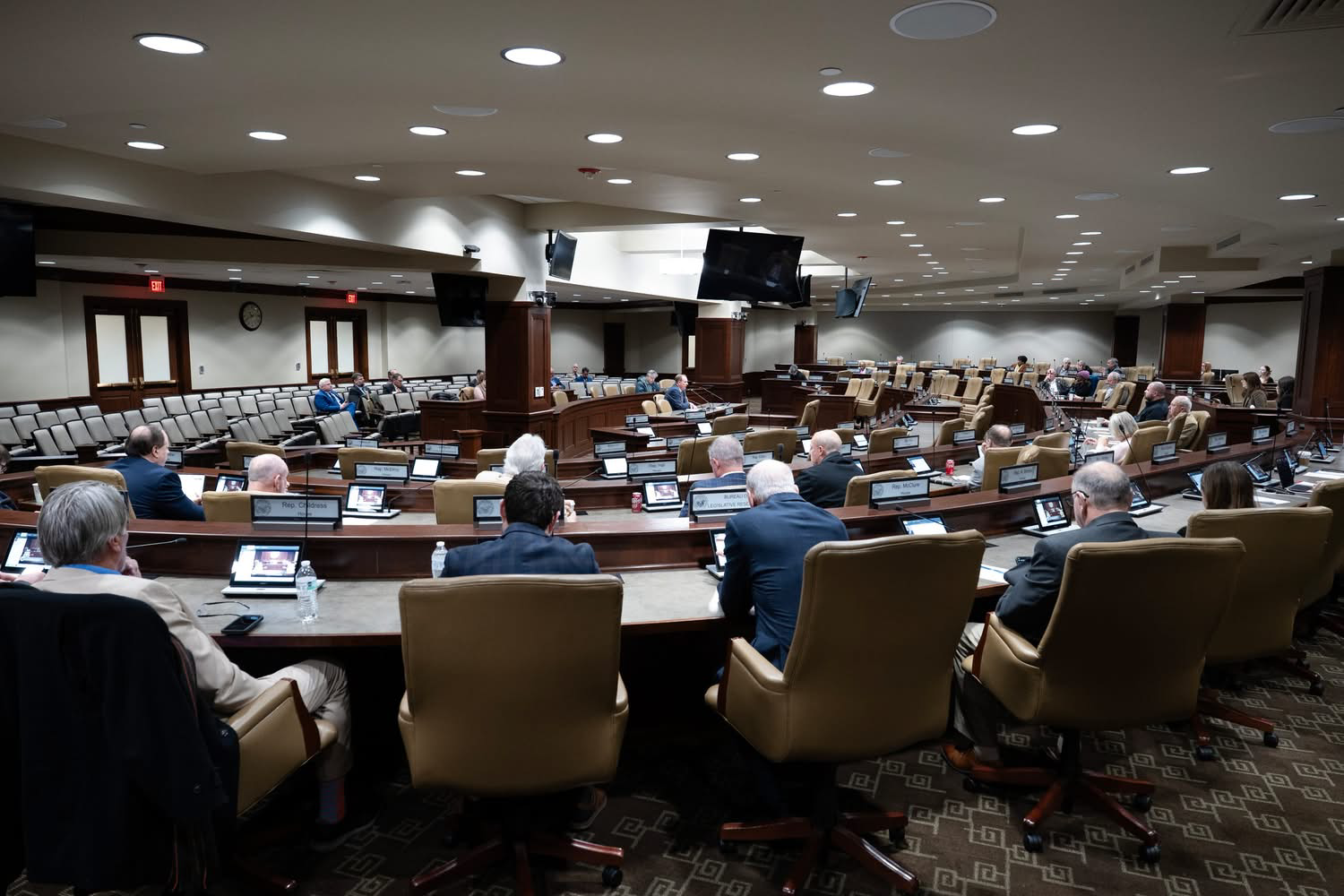
House Agriculture, Forestry & Natural Resources Subcommittee listened to farmers, lenders and economists about their concerns with Arkansas agriculture at the Riceland Auditorium in Stuttgart, AR on September 23, 2025. (Photo by Trenton Almgren-Davis/Arkansas House of Representatives)

September 15, 2025

This week, several legislative interim committees continued their work examining key issues facing our state.

On Tuesday, the Joint Performance Review Committee met to discuss citizen concerns regarding the proposed Franklin County Prison.

On Wednesday and Thursday, the House and Senate Public Health, Welfare, and Labor Committees held joint meetings in Texarkana. Lawmakers received updates on a variety of critical topics, including the impact of UAMS Regional Campuses and reports from local health care providers.

A major focus of the hearings was the implementation of Act 124, also known as the Healthy Moms, Healthy Babies Act, which was passed during the 2025 Regular Session. This landmark legislation includes a $45.3 million investment aimed at improving maternal and infant health across Arkansas.

Key provisions of Act 124 include:

  • Presumptive Medicaid eligibility for pregnant women, allowing immediate access to prenatal care while their applications are processed.
  • Expanded Medicaid coverage for remote ultrasounds, remote blood pressure and glucose monitoring.
  • Unbundling of pregnancy-related Medicaid payments, increasing access to up to 14 prenatal and postnatal visits.
  • New Medicaid reimbursements for doulas and community health workers (CHWs), acknowledging their critical support roles during pregnancy and childbirth.

The Department of Human Services (DHS) reported that implementation of some key components is already underway. Presumptive eligibility began on June 1, 2025, with 2,232 women already enrolled. Global unbundling of pregnancy-related care began on July 1, 2025. Other components—including remote monitoring, doula coverage, and lactation specialist services—are currently under review and will soon enter the rulemaking process.

Committee members also heard a presentation addressing mental health challenges among law enforcement, recognizing the growing need for support and resources in this area.

The Legislative Joint Auditing Committee and its subcommittees met this week to review audit reports from municipalities, counties, and state agencies. These regular reviews are vital to ensuring fiscal responsibility and transparency at all levels of government.

These interim meetings allow legislators to dive deeper into policy issues, monitor implementation of new laws, and prepare for a productive 2027 legislative session.

August 25, 2025

This week, members of the ALC Hospital, Medicaid, and Developmental Disabilities Study Subcommittee received a presentation on a new approach that could reshape how Arkansas delivers both workforce and social services.

During the 2025 Regular Session, the General Assembly passed Act 145, which directs the subcommittee to examine reforms to the state’s workforce and social service systems and to recommend legislation addressing any identified gaps.

The committee began its most recent discussion with a sobering overview of the state’s current challenges. In the 2023–24 school year, 32,689 Arkansas students earned high school diplomas. At the same time, the state reported 52,681 unemployed workers and an estimated 41,000 underemployed. Employers, meanwhile, struggled to fill positions, with 86,000 job openings in February 2025 and a peak of more than 102,000 in September 2024—one of the highest job-opening rates in the nation. While Arkansas’s unemployment rate stands at a relatively low 3.7%, the state’s labor force participation rate of 58.4% ranks 43rd nationally.

To address these concerns, the subcommittee heard from WorkED Consulting, a firm that specializes in helping states align workforce development with public assistance programs. The firm highlighted Utah’s “one-door” model, which integrates workforce training and social services into a unified system. Testimony noted that this approach streamlines access to federal and state resources, strategically invests in upskilling workers for in-demand industries, and creates cost efficiencies by focusing on the needs of both employers and job seekers.

The subcommittee will reconvene on September 22 to continue its work. The challenges facing Arkansas are significant, but so is the opportunity. By examining innovative solutions, legislators hope to connect more Arkansans with meaningful employment, strengthen families, and build a stronger foundation for the state’s economy.

August 17, 2025

The Arkansas Legislature had a full schedule this week, as the Arkansas Legislative Council (ALC) and its subcommittees met, as well as the House and Senate City, County, and Local Affairs Committees.

The ALC reviewed the recommendations from the Employee Benefits Division for 2026 health insurance rates for state and school employees. Rates will remain unchanged for active employees, while Medicare-eligible retirees in United Healthcare’s Medicare Advantage and Health Advantage supplemental plans will see a $6 monthly increase.

In response to recent flooding in Texas, the Game and Fish/State Police Subcommittee will conduct a study on Arkansas’ emergency flood preparedness. Arkansas State Police Director Col. Mike Hagar also briefed the subcommittee on the recent homicide at Devil’s Den State Park.

The Council reviewed proposed changes to how public school letter grades and performance awards are determined. Under the new rules, grades will be based on:

  • Elementary/Middle Schools: Proficiency in English, math, and science; individual growth; and growth of the lowest-performing 25%.
  • High Schools: These measures, plus graduation rate and diplomas of merit/distinction tied to enrollment, enlistment, or employment.

Grades will be assigned relative to the performance of other Arkansas schools, not strictly by raw percentage scores.

The House and Senate City, County, and Local Affairs committees met in Rogers this week and reviewed prison capacity needs. The state’s inmate population—currently about 20,000—is projected to grow 2% annually, reaching roughly 25,000 by 2035. Members were told the Protect Arkansas Act will require 1,500–2,000 additional beds by 2040.

The week’s meetings reflected the legislature’s focus on long-term planning—whether for education, public safety, infrastructure, or criminal justice.

August 10, 2025

As the new school year begins, thousands of school buses will once again be on the roads across Arkansas, transporting more than 350,000 children safely to and from school each day. That’s more than 350,000 reasons for all of us to stay alert and follow the law.

Each stop a bus makes, whether in a neighborhood, on a highway, or outside a school, is an opportunity for a child to safely start or end their school day. But that safety depends on all of us.

We want to remind Arkansans: it is illegal to pass a stopped school bus in our state. And for good reason.

In 2005, the Arkansas General Assembly passed Isaac’s Law after the tragic death of Isaac Brian, a young student in the Bryant School District who was killed when a driver illegally passed a stopped school bus. This law significantly increased penalties for drivers who violate bus safety laws. It also serves as a solemn reminder of what’s at stake.

Here’s what you need to know:

  • On both 2-lane and 4-lane roads, even those with center turn lanes, drivers must stop in both directions when a school bus is loading or unloading children.
  • Act 264 of 2021 clarified that vehicles must stop at least 30 feet away from the bus. This applies to public streets, school parking lots, and even private driveways that are open to the public.
  • When the bus is stopped with flashing red lights and its stop arm extended, you must stop and remain stopped until the bus begins moving again.
  • And don’t forget: using a handheld phone in a school zone is not just dangerous, it’s also illegal in Arkansas, thanks to legislation passed in 2019.

Flashing red lights mean children are nearby. Children who may not see you. Children who may not hear you. Children whose lives depend on you making the right decision.

Let’s all do our part this school year to protect our students by staying focused, driving carefully, and always stopping for school buses.

Because nothing is more important than getting Arkansas’s children to school and back home safely.

July 29, 2025

As families across Arkansas prepare for the upcoming school year, the Arkansas House of Representatives is reminding residents to take advantage of the state’s annual Sales Tax Holiday—set for Saturday, August 2, through Sunday, August 3, 2025.

This two-day event allows shoppers to purchase eligible items free of state and local sales tax. The tax break begins at 12:01 a.m. on Saturday and ends at 11:59 p.m. on Sunday. Whether shopping in-store or online, this is an opportunity for families to save on important back-to-school purchases.

Under Act 757 of 2011, Arkansas holds a sales tax holiday on the first weekend of August each year. During this time, certain products are exempt from sales tax, including:

  • Clothing and footwear priced under $100 per item
  • Clothing accessories priced under $50 per item
  • School supplies
  • School art supplies
  • School instructional materials
  • Electronic devices commonly used by students for academic purposes

Online purchases also qualify for the exemption as long as the order is placed within the designated timeframe and includes eligible items.

All retailers, both brick-and-mortar and online, are required to participate and may not charge tax on items that fall within the exemption guidelines.

With U.S. parents expected to spend an average of $875 on back-to-school shopping this year, Arkansas’s tax-free weekend provides meaningful relief to families preparing for the year ahead.

Arkansas is one of 19 states offering this kind of tax break, helping to stretch household budgets and ensure students have the supplies they need to succeed.

We encourage you to mark your calendars and take full advantage of the Sales Tax Holiday this August. For a full list of eligible items and more details visit arkansashouse.org.

July 14, 2025

This week at the Capitol, legislative committees continued their interim work, focusing on public health, judicial reform, and corrections oversight.

On Monday, the House and Senate Public Health, Welfare, and Labor Committees convened to review interim study proposals aimed at improving the health and safety of Arkansans. The committees adopted a proposal to explore requiring pediatricians to screen for type 1 diabetes, as well as a proposal to study expanding mental health resources for first responders. Committee members met again on Wednesday for a tour of the Arkansas State Hospital, continuing their efforts to better understand the state’s behavioral health infrastructure.

Also on Wednesday, the House Rules Committee held a meeting to examine the impact of a recent U.S. Court of Appeals for the 8th Circuit ruling on legislation passed in 2023. Act 629 prohibits the growth, processing, sale, transfer, or possession of industrial hemp containing certain delta tetrahydrocannabinol (THC) substances, including Delta-8 and Delta-9.  Although the ban has been tied up in legal challenges and remained unenforced, the U.S. Court of Appeals for the 8th Circuit recently upheld the law. The Arkansas Department of Finance and Administration informed the committee that it anticipates an additional court order that will clear the way for enforcement. In the meantime, the agency has begun notifying smoke shops and convenience stores across the state that enforcement efforts are expected to begin soon.

The House Judiciary Committee met Thursday to consider an interim study on potential amendments to the Domestic Abuse Act of 1991.

Meanwhile, the Charitable, Penal, and Correctional Institutions Subcommittee of the Arkansas Legislative Council also met Thursday to review the Department of Corrections’ response to a May 25 prisoner escape from the Calico Rock facility. Officials reported that two employees were terminated for violating security protocols.

As the interim session continues, House members remain focused on oversight, policy review, and long-term planning to better serve the people of Arkansas.


July 6, 2025

As Arkansans gather to celebrate the Fourth of July, we are reminded that the spirit of independence lives in both our history and our land. From the Ozark trails to the Ouachita River, Arkansas offers some of the most spectacular outdoor experiences in the country. And this year, thanks to legislation passed during the 2025 Regular Session, we’re investing in that promise like never before.

Tourism is Arkansas’ second-largest industry. In the most recent year for which data is available, Arkansas welcomed more than 50 million visitors who spent nearly $10 billion, much of it on outdoor recreation opportunities.

This year, the General Assembly took significant steps to continue expanding outdoor tourism and recreational opportunities for families. Act 318 created the Office of Outdoor Recreation within the Department of Parks, Heritage, and Tourism. This new office will help coordinate programs, policies, and partnerships that highlight Arkansas’s natural treasures and strengthen our tourism economy.

With Act 155, we established a clear legal framework for outdoor activities and recreational tramways. This legislation lays the groundwork for bringing lift access to downhill mountain bike parks to Arkansas.

We also passed Act 838, making it easier for businesses to invest in tourism attractions, particularly near our parks and historic sites, through expanded Natural State Initiative Opportunity Zones.  Act 100 modernizes the way we manage trails and clarifies protections for private landowners who open their property for recreational use, ensuring that activities like rock climbing, cycling, and paddling continue to thrive.

As we mark Independence Day, we celebrate the freedoms we enjoy—and the natural beauty that defines our state. The legislation passed this year honors both, by opening new doors for exploration, economic growth, and shared pride in the land we call home.

June 16, 2025

This week, several members of the Arkansas House of Representatives traded their suits for aprons and served meals, not in the Capitol, but at the annual Serving Up Solutions fundraiser. This event supports the Arkansas Hunger Relief Alliance, and proceeds go directly toward grants for food banks and soup kitchens across the state. It’s just one way lawmakers are stepping up to fight hunger, both through volunteerism and through policy.

In the most recent legislative session, the General Assembly passed several key measures aimed at reducing food insecurity in Arkansas.

Act 1008, the Grocery Tax Relief Act, will exempt groceries from state sales and use tax starting in 2026, making healthy food more affordable for families across the state.

Act 123 guarantees free breakfast every school day for all students in Arkansas public schools. The law directs funds from medical marijuana taxes to support this effort.

To further expand access to nutritious meals, Act 870 created the Healthy Food Retailer Program. This program, managed by the Arkansas Economic Development Commission, offers funding to grocery stores and retailers who commit to bringing fresh, healthy food to underserved communities.

Food donations also received a boost. Act 942, the Food Donation Liability and Immunity Act, offers protection from civil or criminal liability to those who donate or distribute food in good faith, encouraging more businesses and individuals to give.

Additional legislation included Act 714, which extends sales tax exemptions to school cafeterias managed by third-party vendors. With Act 529, Arkansans now have the explicit right to grow vegetable gardens on their private property—another step toward establishing local, sustainable food sources.

Together, these actions represent a comprehensive, bipartisan effort to ensure no Arkansan goes hungry. From tax relief to school meals, garden rights to food donation laws, the 95th General Assembly is working to make food more accessible and affordable across our state.

June 9, 2025

From reviewing proposed healthcare rules to tracking revenue trends and conducting vital audits, it has been a busy and productive week at the Capitol

The Department of Finance and Administration released the May General Revenue Report, providing an updated view of the state’s financial outlook. The Official General Revenue Forecast, revised on May 21, 2025, takes into account the delayed income tax payments following the federal and state extensions granted due to severe storms. As a result, many individual and corporate income tax payments typically received in May and June are now expected to arrive by July 31.

Despite this delay, the revised forecast projects a year-end surplus of $214.8 million. Net Available General Revenues currently total $5.9 billion, which is $244.6 million—or 4.0%—below levels at this time last year. Eleven months into the fiscal year, revenue remains above forecast by $17.1 million, or 0.3%.

On the policy front, the House and Senate Public Health, Welfare, and Labor Committees convened on Wednesday to review important proposed rules from the Department of Human Services. These rules are part of the Healthy Moms, Healthy Babies Act of 2025, which aims to enhance maternal and infant care in Arkansas. One rule grants presumptive Medicaid eligibility for pregnant women, helping ensure immediate access to care while eligibility is formally confirmed. Another proposed rule modernizes reimbursement rates and claims processes for prenatal, delivery, and postpartum services, helping providers deliver care more efficiently and effectively.

Committees also reviewed amendments to Arkansas’ surface water quality standards, part of the state’s responsibility under the federal Clean Water Act.

Finally, the Legislative Joint Auditing Committee and its subcommittees held meetings to continue their essential oversight work. This committee plays a critical role in examining the financial operations of state entities—from agencies to commissions—and ensures transparency and accountability for how taxpayer dollars are spent.

We will continue to keep you updated on developments from your State Capitol.

Little Rock, AR – June 4: in Little Rock, AR on June 4, 2025. (Photo by Will Newton/Arkansas House of Representatives)

May 19, 2025

Transportation is more than just a matter of convenience — it’s about safety, infrastructure, and supporting the flow of commerce that powers Arkansas’s economy. During the 2025 Regular Session, the House of Representatives passed a series of laws aimed at keeping our roads safe, improving communication between drivers and law enforcement, and ensuring our infrastructure is secure.

Work zones, especially mobile work zones, can be dangerous places for road crews and drivers alike. Act 327 now defines what constitutes a mobile work zone and gives law enforcement the authority to double fines for traffic violations within them.

In that same spirit of safety, Act 117 updates the driver’s instruction manual and licensing exam to include critical information on how to drive safely through highway work zones.

Act 209 addresses visibility and safety by authorizing the use of green lights on roadway construction and maintenance vehicles.

The House also took action to improve communication between law enforcement and Arkansans with autism. Act 16 creates the Blue Envelope Program, a tool designed to assist individuals on the autism spectrum during traffic stops or other vehicle-related encounters with police. The envelope contains essential documents, while the outside includes communication guidelines to help officers understand and adapt to the needs of the driver.

We also made improvements to how the state handles identification and licensing. Act 17 removes the mandatory $10 fee previously required for a digitized driver’s license.

Commercial drivers play a vital role in keeping goods moving across Arkansas. Act 604 was enacted to require commercial driver’s license (CDL) holders to possess U.S. work authorization and demonstrate English proficiency.

Act 528 creates the offense of tampering with rail infrastructure, recognizing the severe consequences such actions can have on safety, commerce, and public trust.

In response to an increase in cargo theft in the previous years, Act 322 introduces an enhanced penalty for cargo theft. Those convicted now face up to an additional 10 years in prison.

Together, these new laws reflect a commitment to keeping Arkansas moving safely and efficiently. Whether it’s protecting roadside workers, supporting vulnerable drivers, modernizing identification services, or deterring crime, the House remains focused on building a safer and stronger transportation system for everyone.

April 19, 2025

The 2025 Regular Session wrapped up its final week of official business, marking several major legislative achievements.

The House adopted two proposed constitutional amendments: SJR15, allowing the General Assembly to establish economic development districts, and SJR11, affirming the fundamental right to keep and bear arms, including the use of ammunition and firearm accessories for lawful purposes. These will appear on the November 2026 ballot alongside HJR1018, the Citizens Only Voting Amendment.

Lawmakers also passed HB2003, the Revenue Stabilization Law, which sets the Fiscal Year 2026 budget with a 2.9% increase in state spending. Key allocations include $1 million for foster care, $4.3 million for juvenile facilities, $13 million for maternal health, and $90 million for Educational Freedom Accounts.

SB636 allocates surplus funds with $136 million for state property insurance, $100 million for Medicaid sustainability, $90 million for the Education Funding Act, and $45 million for discretionary needs.

SB290 introduces a process for future watershed moratoriums while protecting current ones for the Buffalo River and Lake Maumelle. SB612 allows parents to sue social media companies if the platform design harms their child’s mental health.

Throughout the session, the 95th General Assembly prioritized maternal health, education, and child safety. Lawmakers passed measures to safeguard children from social media harms, banned cell phones in schools to reduce distractions, and reformed higher education. A landmark step was taken by funding free school breakfasts for every Arkansas student.

Finally, families will see relief at the checkout line with the elimination of the state grocery tax.

The House will formally adjourn the 2025 Regular Session on May 5, ending a session focused on health, safety, and opportunity for all Arkansans.


April 14, 2025

As we approach the final days of the 2025 Regular Session, the Arkansas House of Representatives remains focused on passing legislation that will have a lasting impact on the lives of Arkansans. We anticipate adjourning on April 16, and several key bills have advanced as we wrap up our work.

This week, the House passed HB1685, a bill that proposes eliminating the state’s 0.125% sales tax on groceries, effective January 1, 2026. This effort continues our work to reduce the tax burden on Arkansas families.

The House passed HB1312, amending public school funding to provide an increase of 5% in per pupil funding, raising it to $8,162 for the 2025-2026 school year. This amount includes the cost of health insurance. For the 2026-2027 school year, the per pupil amount is set at $8,037, with the $333 for insurance costs being paid directly to the Employee Benefits Division.

We also adopted HJR1018, a proposed constitutional amendment titled “The Citizens Only Voting Amendment.”  This proposed amendment, if approved by the Senate, will appear on the November 2026 ballot. It proposes that only U.S. citizens who meet voter qualifications may vote in state and local elections.

A number of additional measures also passed the House:

  • HB1732, which increases the income tax deduction for teachers purchasing classroom supplies from $500 to $1,000.
  • HB1485, which creates a sales and use tax exemption for organizations supporting veterans’ facilities.
  • HB1922, which establishes an income tax credit for companies that relocate their corporate headquarters to Arkansas, further enhancing our state’s economic competitiveness.

Finally, the proposed Revenue Stabilization Act (RSA) for the 2025-2026 Fiscal Year was distributed to members on Friday. This document outlines our state spending priorities. You can view the proposed RSA at arkansashouse.org.

April 6, 2025

This week, the Arkansas House of Representatives passed several significant pieces of legislation focused on maternal health, breast cancer treatment, and state employee compensation.

HB1004 aims to extend Medicaid coverage to postpartum mothers for one year after childbirth, while HB1826 ensures that insurance covers births at licensed birthing centers, helping to expand access to care in rural areas. Additionally, HB1333 requires insurance to cover breastfeeding and lactation consultant services.

In another important development, SB392 adjusts the classification and compensation of state employees to bring their salaries in line with labor market rates, ensuring fairness in pay.

The House also passed SB83, a health-related bill that mandates health benefit plans in the state to provide coverage for all types of breast reconstruction surgery starting January 1, 2026. This legislation guarantees that any surgery considered the best treatment by a healthcare professional and in consultation with the patient will be covered, whether following trauma, the loss of breast tissue due to disease, or a mastectomy. Moreover, HB1859 was approved to amend current laws on mastectomies by requiring health plans to cover the use of artificial or biological mesh and nerve grafts in reconstruction surgeries.

The Arkansas House Revenue and Taxation Committee moved forward with HB1685, which proposes eliminating the state’s 0.125% sales tax on groceries starting January 1, 2026. In addition, HB1631, which seeks to phase out the state’s soft drink tax, also advanced through the committee.

Furthermore, the House State Agencies and Governmental Affairs Committee advanced HJR1018, a proposed Constitutional Amendment known as the Citizens Only Voting Amendment, which is expected to be considered on the House floor next week.

The House will reconvene on Monday, with plans to complete its business for the 2025 Regular Session by April 16. You can watch all House meetings at arkansashouse.org.

March 17, 2025

In a move to reform Arkansas’ higher education system, the House recently passed HB1512, which lays the groundwork for the creation of the Arkansas ACCESS Act. This bill is designed to address critical issues surrounding access to education, affordability, and student success across the state, with its principles encapsulated in the acronym ACCESS—Acceleration, Common Sense, Cost, Eligibility, Scholarships, and Standardization.

The Acceleration component of the ACCESS Act focuses on enhancing the readiness of high school students for higher education and future careers. It aims to broaden accelerated coursework options in Arkansas high schools.

The Common Sense provisions of the bill seek to foster unbiased learning environments in higher education. The bill also introduces the “Purple Star Campus” designation, recognizing institutions that support servicemembers and military families.

Addressing Cost concerns, the ACCESS Act proposes reforming the funding model to encourage diverse educational pathways, including non-degree credentials. The bill introduces a new productivity-based funding model that factors in the return on investment for students.

The Eligibility section of the bill works toward creating uniformity and efficiency in college admissions. It expands the types of exams that can be used for college admissions.

In terms of Scholarships, the ACCESS Act expands the Workforce Challenge Scholarship and increases the Arkansas Academic Challenge first-year award from $1,000 to $2,000.

Finally, Standardization is a key focus, aiming to reduce the time it takes for students to earn their degrees. The bill proposes the standardization of course numbering across all state-supported institutions, making it easier for students to transfer credits.

The ACCESS Act was one of just many bills passed by the House in the 9thweek of the 2025 Regular Session. You can find summaries of the legislation addressed this week at arkansashouse.org.

March 3, 2025

During the 7th week of the 2025 Regular Session, the House approved HCR1006, extending the session until April 16, with adjournment Sine Die on May 5.

The House passed three bills this week focusing on initiatives and referendum petitions. SB207 requires canvassers to inform potential petitioners that petition fraud is a class A misdemeanor. SB208 requires canvassers to verify petitioners’ photo IDs before collecting signatures, while SB211 mandates canvassers to submit an affidavit confirming their adherence to Arkansas laws concerning canvassing, perjury, forgery, and election fraud.

The House also passed two bills this week addressing human trafficking. HB1474 mandates the display of information about the National Human Trafficking Hotline at nail salons, massage businesses, and any privately owned facilities offering food, fuel, shower, or sanitary services, as well as overnight parking, within 1,320 feet of an interstate. HB1440 requires massage therapy establishments to list all therapists working there with the Arkansas Department of Health.

Education legislation was also addressed with the passage of SB206 and HB1117. SB206 increases the maximum amount for literacy tutoring grants from $500 to $1,500, provided funding is available.

HB1117 states that all public school districts and open-enrollment charter schools must provide students with age-appropriate and grade-appropriate firearm safety instruction.

Beginning March 3, the House State Agencies and Governmental Affairs Committee will begin hearing proposed constitutional amendments after House adjournment on Mondays. There are 20 proposals filed in the House, and the committee will hear testimony on all of the proposals before taking any votes. Pursuant to the Arkansas Constitution, the General Assembly can place up to three constitutional amendments on the November 2026 General Election Ballot.

For more details, you can access proposed amendments, and recently filed bills, and watch all House meetings at arkansashouse.org.

February 23, 2025

During this legislative session, over 130 bills have been signed into law. This week, two significant bills aimed at supporting Arkansas students were signed by the Governor. Act 123 ensures that every student in Arkansas public schools receives one free breakfast every school day, regardless of their eligibility for federal meal programs. Act 122, also known as the Bell to Bell, No Cell Act, prohibits students from using cell phones and personal electronic devices during school hours, with a few exceptions.

The Governor also signed into law the Healthy Moms, Healthy Babies Act. Act 124 is a $45.3 million investment to expand healthcare access for pregnant women.

In other legislative news, the House passed SB98, which allows third-party delivery services to transport alcoholic beverages from certain retailers. The bill includes guidelines for the permit process and the responsibilities of retailers. Additionally, SB97 was passed, allowing businesses to own up to three retail liquor licenses, provided these licenses are in different counties, each with a population of 200,000 or more.

The House also advanced several bills focused on teacher retirement. HB1161 permits members to purchase partial years of service credit for gap years, a provision previously unavailable. HB1156 shortens the waiting period for a new spouse to be eligible for survivor benefits from two years to one year following the member’s death.

Further, the House passed HB1258, which establishes the Community Health Worker Act and creates a statewide certification for community health workers. SB137, which was also approved, enables healthcare providers to store medical records electronically.

HB1131, passed by the House, grants advanced practice registered nurses the authority to delegate certain nursing tasks to qualified healthcare workers.

The House passed HB1475, a bill that authorizes roadway construction or maintenance vehicles to use green lights.

SB214, also approved by the House, adds second-degree murder to the list of offenses that disqualify an individual from meritorious furlough.

Lastly, HB1437, which restricts level 3 and level 4 sex offenders from coming within 100 feet of water parks, swimming areas, children’s playgrounds, or public parks, was passed by the House.


February 17, 2025

As we move through the 2025 Regular Session, the Arkansas House of Representatives has passed several bills that will impact our communities, focusing on education, healthcare, and food security. Here’s a summary of the key measures approved during the fifth week of the session:

SB59: An Act to Provide Each Public School Student with Breakfast at No Cost

This bill ensures that every student in Arkansas public schools will be entitled to one free breakfast per school day, regardless of their eligibility for federally funded meals. Funded through medical marijuana tax revenue, the bill was passed with the goal of addressing food insecurity among students. Arkansas ranked as the hungriest state in the nation in 2023 with 18.9% of households experiencing food insecurity.

SB142: Bell to Bell, No Cell Act

The House also passed SB142, which addresses the growing concern over cell phone use in schools. Known as the Bell to Bell, No Cell Act, this bill mandates that public and charter schools prohibit students from using cell phones and personal electronic devices during the school day. There are exceptions, including emergency situations, and schools will be required to create policies in compliance with the guidelines set by the bill. These include allowing for the use of phones for special events, medical reasons, or for students accessing college coursework through two-factor authentication.

HB1427: Healthy Moms, Healthy Babies Act

HB1427 represents a major step forward in supporting maternal health in Arkansas. The bill, which is a $45.3 million investment, expands access to healthcare for pregnant women. It establishes presumptive Medicaid eligibility for expectant mothers, creates reimbursement pathways for doulas and community health workers, and broadens Medicaid coverage to include remote monitoring services like ultrasounds, blood pressure checks, and continuous glucose monitoring. The bill also improves access to prenatal and postnatal care by unbundling Medicaid payments, ensuring coverage for up to 14 visits.

These bills represent a commitment to improving the well-being of Arkansas’ families, from ensuring children have access to a healthy breakfast to expanding access to critical healthcare services. As always, we encourage all Arkansans to stay informed about the legislative process. You can watch all committee meetings and House floor proceedings live at arkansashouse.org

February 10, 2025

As the Arkansas House of Representatives enters the 5th week of the 2025 Regular Session, several key pieces of legislation have moved forward, addressing issues ranging from food freedom to healthcare access and election policy. 

One measure that received House approval, HB1149, ensures that counties and municipalities cannot impose regulations on vegetable gardens located on residential properties. This bill upholds the right of homeowners to cultivate their own produce without restrictions. Similarly, the House passed HB1048, which expands opportunities for small farmers by allowing the sale of unpasteurized milk at farmers’ markets or through direct delivery from the farm where it is produced.

Healthcare policy also saw legislative action this week. HB1181 allows certified nurse midwives to admit and discharge patients from licensed hospitals if granted privileges, improving maternal healthcare access. Additionally, HB1309 clarifies cost-sharing requirements for breast cancer examinations.

The House also passed HB1221 this week, which limits the validity of ballot initiative titles and petition signatures to the election cycle in which they are approved and collected.

In addition, the House also passed SB3, a bill that seeks to eliminate affirmative action programs in state government. The proposed legislation states that the state shall not discriminate against or grant preferential treatment based on race, sex, color, ethnicity, or national origin in matters related to state employment, public education, or state procurement. 

The House also took up legislation impacting seasonal commerce, approving HB1324 to adjust the permissible sales period for fireworks. This bill moves the start date for summer fireworks sales from June 20 to June 13while keeping the existing winter sales period unchanged.

In the week ahead, the House expects to address cell phone restrictions in schools and free breakfast for students. You can watch all House committee meetings and House floor proceedings atarkansashouse.org.

January 27, 2025

The Arkansas House has wrapped up the second week of the 2025 Regular Session, during which several bills were passed.

HB1133, allows the Northwest Technical Institute to appoint a president with an industry background instead of requiring an educational background.

Another measure, HB1006, redesignates the 14th Judicial District as a Division A Judicial District. The House also approved legislation to separate the offices of sheriff and tax collector in both Searcy County and Poinsett County.

Additionally, HB1075 prohibits local governments from restricting the use or sale of lawn care devices based on their energy source and prevents local governments from imposing excise taxes or fees for the same reason.

As the session progresses, members face upcoming deadlines. Any legislation affecting the licensure of healthcare providers must be filed by January 27, while legislation concerning publicly supported retirement or pension plans or state/public school health insurance must be filed by January 31.

To date, more than 200 bills have been filed in the House, and over 90 bills have been introduced in the Senate.

The House will reconvene on Monday, January 27, at 1:30 p.m. All committee meetings and House floor proceedings are live-streamed and recorded at arkansashouse.org

January 20, 2025

With committees ready to hear bills and legislative priorities taking shape, the 2025 Regular Session is off to a productive start.

Several House committees held their organizational meetings this week. These committees are now prepared to begin reviewing and debating the over 170 bills that have been filed in the House so far.

Among the early legislative actions, the House passed HB1056, a bill to establish a Joint Committee on Military and Veterans Affairs. This new committee will consist of 12 House members and 8 Senate members from the Senate State Agencies and Governmental Affairs Committee. It will focus on ongoing studies related to military and veterans’ issues, a critical area currently handled by the House Aging, Children and Youth, Legislative and Military Affairs Committee. A resolution is expected soon to rename that committee to reflect its shifting responsibilities.

Earlier in the week, the Governor addressed the 95th General Assembly and outlined her legislative agenda. A centerpiece of her plan is the Arkansas ACCESS initiative, which aims to expand access to higher education and non-degree credentials for Arkansans. She also proposed eliminating the state grocery tax, using revenue from medical marijuana sales to fund free school breakfasts for all Arkansas students, and enacting legislation to ban cell phone use in schools. In addition, the Governor announced plans to update the Social Media Safety Act to ensure its enforceability and expand the Communist China Defense Act, which would involve divesting state resources from China and banning adversaries from purchasing land near critical infrastructure like military bases and electric substations.

The week began with House members sworn into office on Monday and the election of Representative Brian S. Evans of Cabot as Speaker of the House for the 95th General Assembly. Following his election, Speaker Evans announced his committee chairmanships and leadership appointments, which are now available on the House website at arkansashouse.org.

As the first week concludes, the House looks ahead to a busy session. The House will reconvene on Tuesday, January 21, at 1:30 p.m., after observing Martin Luther King Jr. Day.


January 10. 2025

The Arkansas General Assembly will convene for the 2025 Regular Session on Monday, January 13.

The first day of the session will include the swearing-in of all members and the formal election of the Speaker of the House. While the Speaker is officially elected at the start of the session, the 94th General Assembly previously selected Rep. Brian Evans of Cabot as Speaker-designate.

On January 14, the second day of the session, House and Senate members will convene jointly in the House Chamber to hear an address from Governor Sanders. This address will outline the Governor’s legislative priorities and provide key recommendations on the pressing issues facing Arkansas.

Several important deadlines will shape the legislative process this session. Members must file legislation affecting publicly supported retirement or pension plans, the licensure of health care providers, or state/public school health insurance by January 27. Legislation regarding lottery-funded scholarships or constitutional amendments must be filed by February 12, and all appropriation bills must be filed by March 3.

The Speaker will announce committee chair assignments on the first day of the session, and those assignments will be available at arkansashouse.org. Committee meetings and House floor proceedings are open to the public, providing Arkansans with an opportunity to see and participate in the legislative process. Those who wish to voice their support or opposition to a bill can sign in to speak during committee meetings, ensuring their perspectives are heard.

House committee meetings and floor proceedings are live-streamed and recorded, ensuring Arkansans can follow the legislative process in real-time from anywhere. Agendas and links to live-streams can be accessed at arkansashouse.org.

As your state representatives work to address issues ranging from education to health care to economic development, we invite all Arkansans to engage with the legislative process. Whether you reach out to your representative, attend a committee meeting, or follow our live streams, your input helps shape the future of our state.


January 6, 2025

Maternal health will likely be a key focus of the 2025 Regular Session of the Arkansas General Assembly as lawmakers work to address an ongoing challenge in our state.

Addressing maternal health will not only save lives but will also strengthen Arkansas families and communities. Currently, Arkansas faces one of the highest maternal mortality rates in the nation. More than 60% of Arkansas counties have limited maternity care, and many counties have none at all. Limited access to quality health care before, during, and after pregnancy creates serious risks for families.

In March 2024, Governor Sanders signed an Executive Order to Support Moms, Protect Babies, and Improve Maternal Health. The order established the Arkansas Strategic Committee for Maternal Health, which brought together over 100 stakeholders representing organizations from across the state.

The committee’s comprehensive report offers several recommendations to address the maternal health crisis, including:

  • Creating Medicaid pathways for doulas and community health workers as provider types with reimbursable services.
  • Expanding prenatal care services at local health units where care is currently limited or unavailable.
  • Establishing a Family Medicine Obstetrics Fellowship and exploring the creation of obstetrics and gynecology residencies and a school of midwifery in Arkansas.
  • Considering the establishment of maternal health homes and expanding the Life360 Maternity Care Homes program.

The proposals represent solutions to combat the maternal health disparities affecting our communities and ensure that every Arkansan has access to the support and care they need during one of life’s most critical moments. The Governor’s budget proposal also includes $13 million in new Medicaid funding for recommendations made by the committee.

The General Assembly will convene on January 13, 2025. All meetings of the House of Representatives will be streamed live and available for replay at arkansashouse.org.